What Types Of Vehicles Can Be Towed In Geelong?
Not every towing job looks the same, and not every tow truck is set up to handle every vehicle. If you're searching for
towing Geelong drivers can rely on, it helps to know the actual range a professional service covers — because it's a lot broader than most people assume, from a flat-battery hatchback to a boat trailer or a small excavator.
Quick Answer: The Range of Vehicles We Tow in Geelong
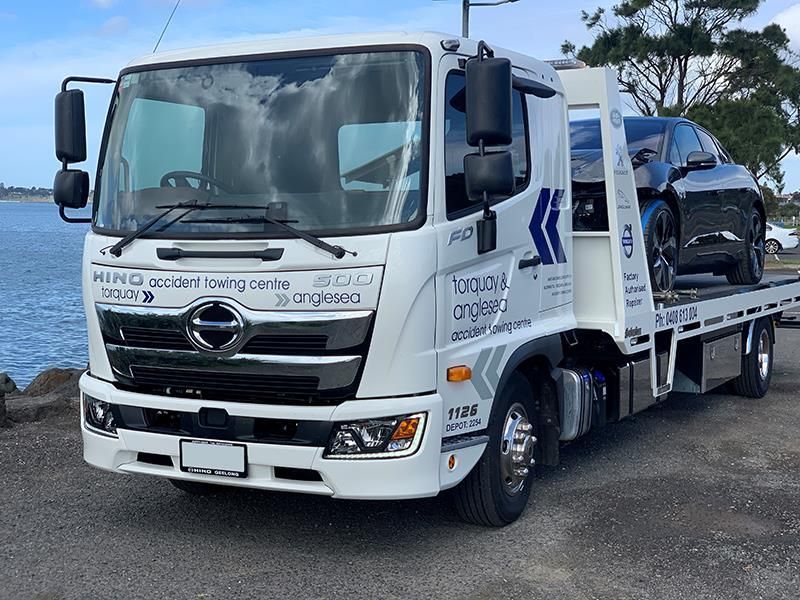
A capable Geelong towing service isn't limited to standard passenger cars. Between flatbeds, wheel-lift trucks and heavier recovery equipment, the vehicle types covered typically include everyday cars and SUVs, motorcycles, 4WDs and utes, vans and light trucks, caravans and trailers, and larger machinery or heavy vehicles that need specialised equipment to move safely. The right equipment depends on the vehicle, not the other way around, which is why a genuinely flexible tow truck Geelong operator carries more than one type of truck.
Cars, SUVs and Everyday Passenger Vehicles
This is the bulk of day-to-day towing work: a car that won't start, a flat tyre with no spare, an overheated engine, or a vehicle that's failed an on-road check. Sedans, hatchbacks and SUVs are usually moved on a flatbed or with a wheel-lift truck, both of which keep the vehicle secure without putting extra strain on the transmission or drivetrain — an important detail for anything with a modern all-wheel-drive or electronic parking brake system.
Motorcycles and Light Vehicles
Motorcycles need their own handling — they can't simply be winched on like a car, since an unsecured bike will shift or tip during transport. A proper motorcycle tow uses wheel chocks and multi-point strapping to keep the bike upright and stable, whether it's a breakdown, an accident, or a bike that's come off its stand.
4WDs, Utes and All-Wheel Drives
Four-wheel drives, utes and all-wheel-drive vehicles are common around Geelong and the surrounding region, and they come with their own towing considerations. Many all-wheel-drive vehicles can't be towed with all four wheels on the ground without risking damage to the drivetrain, so a flatbed is generally the safer option. This matters just as much for a ute stuck off-road as it does for a family SUV that's broken down on the highway.
Vans, Light Trucks and Trailers
Tradie vans, light commercial trucks and trailers add weight and size that a standard car-recovery setup isn't built for. Towing these safely means matching the truck's capacity to the vehicle being moved, securing any load still on board, and accounting for extra length when trailers are involved. A Geelong towing service that handles commercial and trade vehicles regularly will have the heavier-duty equipment this category needs.
Caravans and Recreational Vehicles
Caravans, camper trailers and boats on trailers are a regular call-out, particularly around holiday periods when more of them are on the road. These loads are wider, longer and often top-heavy compared to a standard vehicle, so towing them safely means the right hitch setup, correct load distribution and a truck rated for the combined weight — not just a general-purpose recovery vehicle.
Heavy Vehicles and Machinery
At the larger end, heavy vehicles, trucks and machinery such as small excavators, skid steers or other plant equipment require specialised low-loaders or heavy recovery trucks rather than a standard tow truck. This kind of job typically involves more planning — checking weight limits, route access and loading points — before the vehicle is moved at all.
Accident-Damaged and Non-Running Vehicles
Accident recovery is one of the most sensitive parts of the job, and it's worth being clear about how it actually works: towing companies are dispatched to accident scenes, they don't attend on their own initiative. Attendance follows a call-out from police, emergency services, an insurer or the vehicle owner — a tow truck can't simply turn up because it's nearby. Once dispatched, the priority is recovering the vehicle safely, whether that's a car that's still driveable but damaged, or one that needs to be winched, lifted or flatbedded due to collision damage, a rollover, or being stuck off the road.
Non-running vehicles — anything with a seized engine, transmission fault or electrical failure that leaves it undriveable — are handled the same way as accident recoveries: assessed on site and moved using whichever method keeps the vehicle and everyone around it safe.
Why the Range Matters
The reason vehicle range matters isn't just variety for its own sake — it's what separates a genuinely capable tow truck Geelong operator from one that only handles the easy jobs. A caravan, a motorcycle and a stuck excavator all need different equipment and a different approach, and a provider that's set up for all of them is the one worth having saved in your phone before you need it, not after.
FAQs
Can all vehicles be towed the same way?
No. Cars and SUVs are usually moved by flatbed or wheel-lift, motorcycles need wheel chocks and strapping, all-wheel-drive vehicles generally require a flatbed to protect the drivetrain, and heavier vehicles or machinery need low-loaders or heavy recovery trucks.
Do towing companies attend accidents automatically?
No. Towing companies are dispatched to accident scenes by police, emergency services, an insurer or the vehicle owner — they don't attend on their own without being called out.
Can a caravan or trailer be towed if it's disconnected from the vehicle?
Yes, a detached caravan or trailer can still be recovered, though it needs the correct hitch and load setup to be moved safely, particularly if it's sitting at an angle or partially off the road.
Is a 4WD towed differently to a regular car?
Often, yes. Many 4WDs and all-wheel-drive vehicles shouldn't be towed with all wheels on the ground, since it can damage the drivetrain, so a flatbed is generally the safer choice.
What happens if my vehicle won't start at all?
A non-running vehicle is assessed on site and moved using whichever method suits the fault and the vehicle type, whether that's a straightforward tow or a flatbed if there's a mechanical concern that rules out towing on its wheels.